
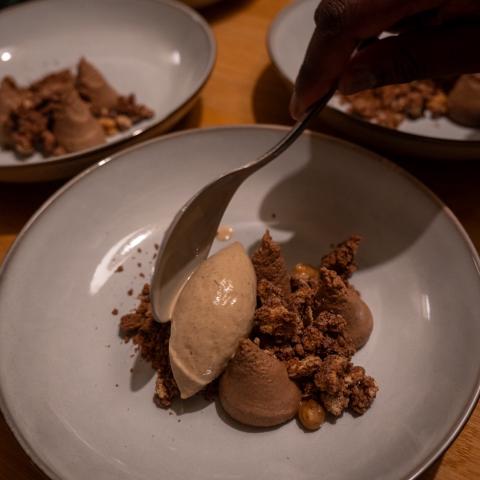
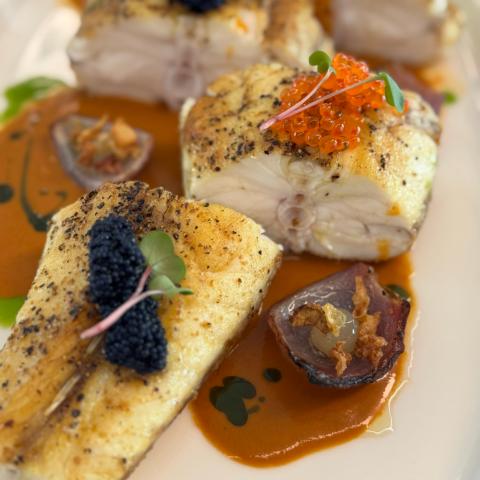
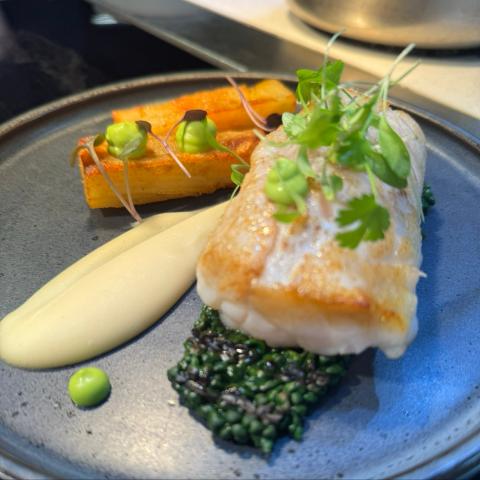

Private chef vs restaurant comes down to who you want doing the work and where. A restaurant is least effort, but you travel and you talk over the next table. A private chef cooks in your home, so you keep the comfort and lose the cleanup. A caterer is the move when numbers climb past what one chef can plate to order. Match the option to the occasion, not the other way round.
Picture a Saturday in Dublin. Six of you, a birthday, and you want a proper sit-down rather than a noisy table booked for a two-hour slot. Book a restaurant and you're out around €45 to €70 a head before a drop of wine, then you're hostage to the 9pm turnover. Have someone cook in your kitchen instead and the night is yours until the candles burn down. Same money, very different evening.
So the real question isn't which one is best. It's which one fits the night you're actually planning. Here's how I'd pick, occasion by occasion, with the cost shape and the cleanup laid out honestly so you can land on the right one.
Quick note on where this comes from. We run CaterKin, an Irish marketplace where you book private chefs, caterers, cooking classes and food experiences directly. So yes, we have a dog in the fight. But a restaurant is genuinely the right call on plenty of nights, and I'll say so below. The aim here is to get you to the correct choice fast, not to talk you into one.
The 30-second version
If you only read one thing, read this. The three options aren't really competing for the same job. They're built for different nights.
- Restaurant: best when you want zero setup and zero cleanup, and you don't mind leaving the house. Worst for privacy, for big groups who want to mingle, and for anyone who likes their own sofa after dinner.
- Private chef: a chef cooks in your home, plates each course and tidies the kitchen before they leave. Best for date nights, dinner parties and small celebrations where the room matters as much as the food. Priced per person through the chef's own packages.
- Caterer: best when the headcount gets serious or the format is buffet, grazing or drop-off. One chef can't plate twenty hot mains to order, but a caterer is set up to feed a crowd. Priced through packages and menu items too, set by the caterer.
What's the best option for a date night?
For two people, this is the closest call, and most of the time a restaurant wins on sheer simplicity. You book, you show up, you leave. No shopping, no dishes, no thinking. If you want a low-effort Friday, go out and enjoy it.
Where a private chef takes the night is the anniversary, the proposal, the birthday where the restaurant version feels a bit flat. You're at your own table, the music is yours, nobody's rushing you for the 9pm sitting, and there's no taxi home at the end. The trade-off is honesty about cost. Two people is the most expensive way to book a chef per head, because the chef still spends most of a day on a two-person tasting menu. Expect the per-person figure to sit at the top of the range for a table of two, and to drop as the table grows.
If you're weighing the exact numbers, we broke down per-head private chef pricing by guest count in our guide to how much a private chef costs in Ireland (linked below). Short version for two: it's a treat, not an everyday spend, but for the right occasion it beats a restaurant hands down.
What's the best option for a dinner party?
This is the sweet spot for a private chef, and it's the one people underestimate. Six to ten around your table, a few courses, good chat. Do it yourself and you spend three days planning, a half-day shopping and the whole evening in the kitchen instead of with your guests. You're sweating over a reduction while everyone else is on their second glass.
A private chef flips that. They plan the menu with you, bring most of what they need, cook it in your kitchen, serve each course and leave the kitchen the way they found it. You sit down with your own guests. That's the part that's hard to put a price on, and it's why a chef at home so often beats a restaurant for a dinner party. A restaurant can't give you your own front room.
Cost-wise it scales in your favour. The chef's fixed time spreads across more plates, so the per-head figure falls as the table grows from four to six to ten. Around eight to ten guests is where a private chef dinner often lands close to what the same group would spend at a mid-range restaurant, except nobody had to book a taxi or shout over the next table.
When does a caterer make more sense than a chef for a dinner party? When the format isn't plated courses. If you want a relaxed grazing table, a feast that lands all at once, or a buffet people help themselves to, a caterer is built for exactly that. A chef is for the sit-down, course-by-course evening.
What's the best option for a big party?
Past roughly fifteen to twenty people, the maths changes and a caterer is usually the answer. One chef plating hot courses to order simply doesn't work at scale. The kitchen can't keep up and the food suffers. A caterer is set up for volume: buffet, family-style sharing platters, grazing tables, or hot mains held properly and served fast.
The cost shape is different too. Catering in Ireland spans a wide band per head depending on format, from a simple buffet at the lower end to a multi-course served meal at the top, and hosts set their own prices. Some caterers set a minimum order, which you'll see on their profile, so a tiny booking might not suit them. For a fortieth, a christening lunch or a house-warming for thirty, a caterer takes the whole job off your plate.
A restaurant can do a big group of course, but the restaurant version of a big party means a function room, a fixed set menu and a hard finish time. If the point of the party is people moving around your house, glasses topped up, food they can graze at over four hours, catering at home gives you that and a restaurant can't.
What's the best option for a corporate event?
Work events split cleanly by what you're trying to do. A restaurant suits the small team dinner or the client lunch where you want a neutral venue and zero logistics on your side. Book it, expense it, done.
Catering takes over the moment the event is at your office or a hired space: a launch, an all-hands, a training day that needs lunch, a Christmas do for the team. You want food delivered and set up where the people already are, with dietary requirements handled and nobody losing an hour to a restaurant booking. For the office, that's a caterer almost every time.
There's a third option people forget for team events: a cooking class or a food experience. Instead of feeding people, you give them something to do together. It's a stronger team night than another dinner where everyone stares at their phones, and it doubles as the meal. Worth a look if the brief is bonding rather than just lunch.
Cost, cleanup and effort, side by side
Here's the honest comparison across the three. Prices are typical Irish per-person ranges and hosts on CaterKin set their own, so treat these as the shape of the spend, not fixed figures.
| Restaurant | Private chef | Caterer | |
|---|---|---|---|
| Best for | Date night, small team dinner, low effort | Dinner parties, special occasions at home | Big parties, office events, buffets |
| Typical cost per head | around €45 to €70 before drinks | about €40 to €120 per person | about €25 to €150 per person |
| Where it happens | Their venue, you travel | Your home | Your home, office or hired space |
| Your effort | Book and show up | Pick a menu, then relax | Brief the format, then relax |
| Cleanup | None | Chef tidies the kitchen | Caterer clears their setup |
| Group size | Capped by the table or function room | Best up to about 10 to 12 | Scales to large numbers |
Two things that don't show up in a table but matter. First, drinks. With a restaurant you're paying their markup on every glass; at home, the wine is yours at off-licence prices, which quietly closes a lot of the cost gap. Second, the evening itself. A restaurant gives you two hours and a turnover slot. At home, the night runs as long as you want it to. For some occasions that's the whole point.
How booking a chef or caterer actually works
The thing that puts people off booking a chef is usually not knowing how the money and the trust side works. On CaterKin it's straightforward, so here's the plain version.
- You browse a host's profile and either request their listing directly or message them first to agree a custom quote in the chat, then pay.
- When you request, you enter your card details and a hold is placed. You are not charged at that point.
- You're charged only when the host accepts the booking. If they decline or don't respond, the hold is released and you're never charged.
- Payments run through Stripe, so your card details never touch CaterKin.
- Every host is reviewed and approved by our team before they go live, and completes Stripe's identity checks to get paid.
You and the host talk through in-app messaging, and only a first name and photo are shared between you. Your email and phone stay private. The one detail a host does get is the event address, because they need it to turn up and cook. Cancellation refunds follow a simple sliding scale on the service price. Cancel seven or more days out and you get all of it back, three to seven days is half, one to three days is a quarter, and inside 24 hours there's no refund. The processing fee isn't refundable. If a host cancels a confirmed booking on you, you get everything back including fees.
Classes and experiences are priced per person, a ticket price times the number of people, while chefs and caterers price through their own packages and menu items. If you want to see what real chefs in your area charge, the simplest next step is to browse a few private chef profiles and read them properly. Inventory is strongest in Dublin right now and growing in other cities.
Frequently asked questions
Is a private chef cheaper than a restaurant?
It depends on the group. For two people a chef is usually dearer per head, because the chef spends most of a day on a small menu. For a dinner party of eight to ten, a private chef at home often lands close to a mid-range restaurant once you count the restaurant's drinks markup, and you keep your own table and your whole evening. Hosts set their own prices, so check a few profiles to compare.
Should I hire a chef or eat out for a special occasion?
For an anniversary, proposal or milestone birthday where the room and the privacy matter, a private chef at home usually wins, because no restaurant can give you your own front room with no taxi home and no turnover slot. For a casual, low-effort night, eating out is simpler. Match it to how much the setting matters.
When should I choose a caterer over a private chef?
Choose a caterer once the headcount climbs past roughly fifteen to twenty, or when the format is buffet, grazing or drop-off rather than plated courses. One chef can't plate a lot of hot mains to order, but a caterer is set up to feed a crowd. A chef is for the sit-down, course-by-course dinner.
Do I pay straight away when I book a chef?
No. When you request a booking and enter your card, only a hold is placed. You're charged when the host accepts. If the host declines or doesn't respond, the hold is released and you're never charged. Payments run through Stripe, so your card details never touch CaterKin.
What's the best option for a corporate event?
A restaurant suits a small team or client dinner with no logistics on your side. For anything at your office or a hired space, a launch, an all-hands or a Christmas do, catering is the better fit because food comes to where your people already are. If the brief is team bonding, a cooking class or food experience can work better than another sit-down dinner.