

I’m Ciaran, one of the two brothers behind CaterKin. We built a marketplace where you can find and book caterers and chefs all over Ireland, which means I spend a frankly unreasonable amount of my week talking to couples about feeding 80 of their nearest and dearest. The same questions come up every single time: what does wedding catering actually cost in Ireland, what’s the difference between a buffet and family-style, and how do I know I’m not about to get burned?
So this is the guide I wish I could just hand people. No fluff, real 2026 numbers, and a checklist at the end you can screenshot and bring to every quote call. If you’re planning a 30-guest intimate do in Wicklow or a 200-person marquee on the Wild Atlantic Way, the principles are the same.
What wedding caterers on CaterKin actually charge per head
Live prices from 11 caterers currently taking bookings, across 22 menus. Updated 11 September 2026.
| Where | Caterers | Lowest | Typical | Highest |
|---|---|---|---|---|
| All Ireland | 11 | €8 | €29 | €85 |
| Dublin | 4 | €19 | €32 | €85 |
| Co. Kerry | 3 | €30 | €70 | €85 |
Every figure is the real price a host set on a menu you can book today, per person, read straight from live listings when this page was last built. Typical is the median. Counties with only one priced host are folded into the all-Ireland row rather than shown separately, because one host is not a market rate.
How much does wedding catering cost in Ireland in 2026?
Short answer: most Irish couples spend €55 to €130 per head on food, and the style of service moves that number more than almost anything else. The cheapest fed-and-watered option is a casual buffet or a food truck; the most expensive is a multi-course plated tasting menu with paired service staff.
Here’s the per-head breakdown we see across real bookings and quotes in Ireland, by service style. These are food-and-service figures, they don’t include venue hire, alcohol, or the dreaded corkage (more on what’s not included further down).
Per-head wedding catering cost by service style
| Service style | Typical cost per head (2026) | Best for | Notes |
|---|---|---|---|
| Canapés & cocktail reception | €18 to €45 | Drinks receptions, no sit-down meal | Priced per piece (count on 6 to 10 canapés pp); add a few hot bites to feel like a meal |
| Food trucks / street food | €25 to €45 | Relaxed festival-style weddings, late arrivals | Single station = lower; multiple trucks for choice pushes it up |
| Buffet | €35 to €60 | Larger guest counts, mixed crowds, budget-conscious | Cheapest way to feed a big number; less formal feel |
| Family-style / sharing | €55 to €85 | Warmth + flow without full plating | Big platters down the centre of the table; very on-trend in Ireland right now |
| Plated 3-course | €60 to €95 | The classic Irish wedding dinner | The default most venues quote; staff-heavy |
| Plated 5-course / tasting | €95 to €150+ | Fine-dining weddings, smaller guest counts | Adds courses, more skilled kitchen, more service staff |
| Late-night menu (add-on) | €6 to €14 | Soaking up the bar at 11pm | Sliders, chip cones, toasties, mini spice bags, usually on top of the main meal |
A few honest caveats. Dublin and the commuter belt run 10 to 20% higher than the national figures above. Very small weddings (under ~30 guests) often carry a minimum spend or a per-head premium, because the kitchen and staffing costs don’t shrink in proportion to the headcount. And anything described as “from €X” in a brochure is the floor, not the ceiling, the real number lands after you’ve chosen your menu, your service style, and your add-ons.
If you want to sanity-check a quote against live pricing, you can browse caterers and their packages on CaterKin’s catering hub, every host sets their own packages and per-head rates, so you see real numbers, not a vague “POA.”
When to book your wedding caterer (12 months out is normal, here’s why)
The good caterers in Ireland get booked out a year ahead for peak Saturdays (June, July, August, and the September shoulder). That’s not artificial scarcity, a single caterer can usually only do one or two weddings a weekend, because the same small team is cooking, plating, and serving.
A rough timeline that works:
- 12 to 14 months out: lock your caterer for peak-season Saturdays. This is the same window as booking your venue, and often the venue’s preferred-supplier list is where couples start.
- 9 to 12 months out: fine for off-peak dates, weekdays, and winter weddings.
- 6 months out: still very doable for smaller or midweek weddings, especially outside Dublin.
- Inside 3 months: possible, but your choice narrows fast. Last-minute happens, it just means fewer options and less leverage on menu tweaks.
The other reason to book early: the tasting. Most established caterers run tastings seasonally, and you want yours done with enough runway to make changes. Book late and you might be confirming a menu you never actually ate.
Wedding catering styles explained
Picking a style is really picking a feeling for your day, and each one carries a different cost and staffing profile.
Plated dinner service
The traditional Irish wedding meal. Guests are seated, courses come out plated from the kitchen, and service staff work the room. It feels formal and looks beautiful in photos. It’s also the most staff-intensive option, you’re paying for the kitchen brigade and the waiting team, which is why it sits at the higher end of the per-head range.
Family-style sharing
Big platters placed down the centre of each table, and everyone helps themselves. It has the warmth of a big family dinner with most of the polish of plated service, and it gets people talking across the table. It’s having a real moment at Irish weddings and usually lands a touch cheaper than full plating because it needs fewer plate-ups.
Buffet
Guests queue and serve themselves from stations. It’s the most cost-effective way to feed a large number, and it handles a crowd with mixed tastes brilliantly. The trade-off is the queue and a slightly less formal feel, manageable with good station design and enough serving points so 150 people aren’t waiting 40 minutes.
Canapés & cocktail reception
No sit-down meal, just circulating bites and drinks. Perfect for a shorter celebration or a second-wedding-day vibe. Budget 6 to 10 canapés per head if it’s standing in for a meal, and add a couple of more substantial hot items so nobody leaves hungry and three glasses of prosecco deep.
Food trucks & street food
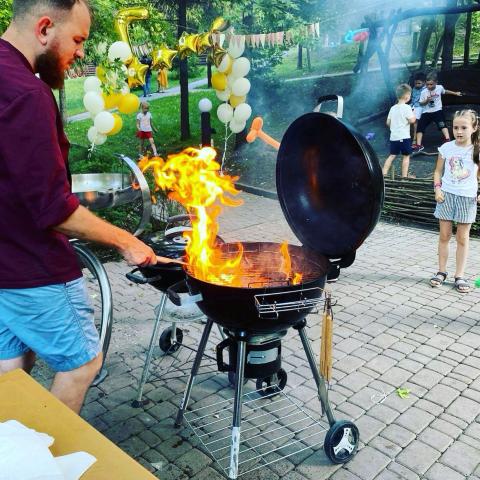
Relaxed, fun, and increasingly common at marquee and outdoor weddings. A wood-fired pizza van, a taco truck, a slow-cooked-meat station. Great for late arrivals and second servings. One truck keeps it cheap; offering choice across multiple trucks adds up quickly.
Late-night menus
Not a main style, an add-on. Around 10 to 11pm, when the bar has done its damage, a tray of sliders, chip cones, or mini spice bags is the single most appreciated thing you can put in front of guests. Cheap per head and disproportionately remembered.
What's typically included in a wedding catering quote
When a caterer quotes you a per-head price, it usually covers:
- Menu planning and consultation, working with you to design courses around your taste and dietary needs.
- Ingredients and prep, sourcing, shopping, and all the kitchen prep before the day.
- Cooking and plating on the day, the kitchen team and equipment.
- Core service staff, enough waiting and kitchen staff to run the meal you chose.
- A tasting, though some charge separately for this; always confirm.
What’s included varies hugely between caterers, which is exactly why an apples-to-apples comparison is so hard. A €70pp quote that includes staff, tableware, and a tasting is a very different animal from a €70pp quote that’s food only.
What's typically NOT included (and how to ask)
This is where budgets blow up. Ask about every one of these in writing:
Tableware, crockery, cutlery and glassware
Sometimes the venue supplies it, sometimes the caterer hires it in and bills you, sometimes it’s genuinely not covered. Hire costs for plates, cutlery, and glasses for 120 guests add up.
Service staff (beyond the base)
The base quote covers a standard meal. Extended service, a longer reception, or a higher staff-to-guest ratio can be billed on top. Ask how many staff are included and for how many hours.
Bar service and corkage
Many caterers don’t run the bar at all. If you’re bringing your own wine, corkage (a per-bottle fee for the venue or caterer to serve it) can be a real number. Confirm who’s pouring and what it costs.
Cake cutting
Yes, some venues and caterers charge a per-head cake-cutting fee to plate and serve a cake you brought yourself. It’s a classic surprise line item. Ask.
Travel, accommodation, and overtime
A caterer travelling to a remote venue in Connemara or West Cork may bill mileage or even overnight accommodation for the team. And if the night runs long, overtime can apply.
The honest take: a good caterer will volunteer all of this upfront. On CaterKin, hosts lay out exactly what their packages include before you ever message them, which is the whole point, you shouldn’t have to play detective to find the real price.
Tastings, etiquette and what to ask
The tasting is the best part of wedding planning, and also where you make your final call. A few things to know:
- Some tastings are free, some are charged (and sometimes credited back if you book). Ask before you turn up.
- Bring the decision-makers. If a parent is paying or has strong opinions, get them to the tasting, not the email thread afterwards.
- Taste the actual wedding menu, not a generic sampler. If you’ve got a vegetarian main going out to 20 guests, taste it.
- Ask how it scales. A dish that’s perfect for two plates is a different challenge at 150. A good caterer will tell you honestly what holds up at volume.
- Talk timing. How long between courses? Cold-plate risk? This is where you learn whether the kitchen can actually deliver the day.
Dietary requirements at scale (the 14 allergens and dual menus)
Irish and EU law requires caterers to declare the 14 listed allergens (cereals containing gluten, crustaceans, eggs, fish, peanuts, soybeans, milk, nuts, celery, mustard, sesame, sulphur dioxide/sulphites, lupin, and molluscs). Any professional caterer will handle this as routine, but you, as the couple, own the guest information.
Practical advice:
- Collect dietary needs on the RSVP, not the week before. Vegetarian, vegan, coeliac, nut allergy, halal, get it early.
- Expect a small uplift for alternative mains. Running a separate vegan or gluten-free main for a portion of guests usually carries a modest per-plate cost, because it’s effectively a second menu.
- Don’t treat “vegan option” as an afterthought. The days of a sad plate of plain veg are over, and a caterer who treats the vegan main as a real dish is a caterer who cares.
- Flag severe allergies explicitly. A nut allergy that’s “anaphylactic” needs a conversation about the whole kitchen, not just one plate.
CaterKin lets hosts tag dietary capabilities and allergens on their listings, so if you’ve got a coeliac top-table or a fully plant-based wedding, you can filter to caterers who actually do it well rather than hoping.
Wedding catering by region
Ireland isn’t one market. Pricing, supply, and the kind of food on offer shift as you move around the country. Here’s the lay of the land.
Dublin & Wicklow
The most competitive, and most expensive, region. You’ll find the widest range of styles, from fine-dining tasting menus to street-food collectives, but expect to pay 10 to 20% above the national per-head figures. The upside is choice and availability of skilled kitchens. Wicklow venues (the “Garden of Ireland” estates and marquees) pull from the same Dublin supplier pool, so book early. Start with wedding caterers around Dublin on CaterKin.
Cork & Kerry
Cork has a genuinely brilliant food scene and a deep bench of caterers who lean into local produce, Skeaghanore duck, West Cork cheeses, Ballymaloe-school sensibilities. Kerry skews towards destination and marquee weddings around Killarney and the peninsulas, where travel logistics matter more (ask about team accommodation for remote venues). Browse catering in Cork to start.
Galway & the West
Galway is a foodie city punching above its weight, and the Wild Atlantic Way brings a strong seafood story, oysters, crab, mussels straight off the coast. Connemara marquee weddings are stunning but logistically remote, so factor in travel for the catering team. See caterers in Galway.
Limerick & the Mid-West
Limerick and the surrounding counties offer strong value versus Dublin without sacrificing quality, and there’s a growing scene of independent chefs and caterers. Great territory for couples who want a proper sit-down wedding without Dublin pricing. Explore catering in Limerick.
Kilkenny & the Southeast
Kilkenny, Waterford, and Wexford make up a fertile, food-proud corner of the country, think artisan producers, craft everything, and characterful venues. Pricing tends to sit at or just below the national average. Have a look at catering in Kilkenny and Waterford.
Sligo & the Northwest
Sligo, Letterkenny, and the Donegal stretch are less saturated, which can mean fewer options but also less competition for your date and keener pricing. Supply is thinner, so booking early matters even more here. Start with catering in Sligo.
How to compare wedding catering quotes (a 10-question checklist)
Screenshot this. Ask every caterer the same ten questions and the “cheapest” quote often turns out not to be.
- Is your per-head price food-only, or does it include service staff?
- What exactly is included, tableware, crockery, cutlery, glassware, linens?
- How many service staff come with this, and for how many hours?
- Is the tasting included, charged, or credited back if we book?
- What do alternative mains (vegan, gluten-free, kids’) cost per plate?
- Are there travel, accommodation, or overtime charges for our venue?
- Is there a minimum spend or minimum guest count?
- Is there a cake-cutting fee or corkage, and who runs the bar?
- What’s the deposit, the payment schedule, and the cancellation policy?
- Are you insured, and do you hold current food-safety/HACCP compliance?
Get the answers in writing. A caterer who’s confident and organised will have no problem putting it in an email. A caterer who gets cagey about line items is telling you something.
Red flags when hiring a wedding caterer
- No written contract or itemised quote. “We’ll sort it nearer the time” is not a plan for the most important meal of your life.
- Vague “from €X” pricing with no path to a real number. You should be able to get to an actual figure.
- No tasting offered at all, or pushback on tasting your actual menu.
- No food-safety/HACCP compliance or insurance they can evidence.
- Won’t give references or recent wedding reviews. Every good caterer has couples who’ll vouch for them.
- Pressure to pay large sums off-platform or in cash with no paper trail. This is the big one, on CaterKin, payment runs through the platform with proper protection precisely so you’re never left exposed.
How CaterKin helps you book wedding catering
We built CaterKin so you don’t have to ring fifteen caterers and chase quotes for a fortnight. You can browse caterers across Ireland, see their real packages and per-head pricing upfront, message a host to ask the ten questions above, and book through the platform with payment protection built in. No “POA,” no mystery line items, no off-platform cash handshakes.
If you’d rather start from your service style than your town, our catering hub lets you filter by what matters to you. And if you’re weighing a full caterer against bringing in a private chef for a smaller wedding, we’ve got hosts for both.
Frequently asked questions
How much does wedding catering cost per head in Ireland in 2026?
Most couples spend €55 to €130 per head on food and service. A buffet or food-truck setup sits around €35 to €60, a plated three-course dinner around €60 to €95, and a five-course tasting menu €95 to €150+. Dublin and the commuter belt typically run 10 to 20% higher.
How much does wedding catering cost for 100 guests in Ireland?
As a rough planning figure, a plated three-course dinner at roughly €70 to €90 per head works out to around €7,000 to €9,000 for food and service for 100 guests, before tableware, bar, and extras. Always confirm what’s included, as quotes vary widely.
When should I book my wedding caterer?
Book 12 to 14 months out for peak-season Saturdays (June, September). Off-peak, midweek, and winter weddings can often be booked 6 to 9 months ahead, especially outside Dublin.
What's the difference between buffet, family-style, and plated wedding catering?
Plated service brings each course out individually from the kitchen and is the most formal and staff-intensive. Family-style places large sharing platters on each table. Buffet has guests serve themselves from stations and is the most cost-effective for large numbers.
How much is wedding catering for a small or intimate wedding?
Small weddings under about 30 guests often carry a higher per-head rate or a minimum spend, because kitchen and staffing costs don’t scale down proportionally. Expect to pay at or above the top of the per-head range, but the total bill is far smaller. A private chef can also be a great fit for intimate weddings.
Is service staff included in wedding catering prices?
Sometimes, sometimes not, always ask. Some caterers quote food-only and bill staff separately; others bundle a standard service team into the per-head price. Confirm how many staff are included and for how many hours.
What's usually not included in a wedding catering quote?
Common extras are tableware and glassware hire, additional service staff, bar service and corkage, cake-cutting fees, and travel or accommodation for remote venues. Ask for an itemised quote so nothing surprises you later.
Do wedding caterers handle dietary requirements and allergies?
Yes, Irish caterers must declare the 14 listed allergens by law, and most happily provide vegetarian, vegan, gluten-free, and halal options. Collect dietary needs on your RSVP, and expect a modest per-plate cost for alternative mains.
How do I compare wedding catering quotes fairly?
Ask every caterer the same questions: is the price food-only or inclusive of staff; what’s included; tasting cost; alternative-main pricing; travel charges; minimum spend; corkage and cake-cutting fees; payment terms; and insurance/HACCP compliance. Get answers in writing.
Are wedding catering tastings free in Ireland?
It varies. Some caterers include the tasting, some charge for it, and some credit the fee back if you book. Always confirm before you attend, and make sure you’re tasting your actual wedding menu, not a generic sampler.
Can I hire a private chef instead of a caterer for my wedding?
For smaller or intimate weddings, a private chef is often a great fit, more personal and often more flexible on bespoke menus. For larger guest counts a dedicated wedding caterer with a full service team is usually the better call. You can compare both on CaterKin.
Do I tip wedding caterers in Ireland?
Tipping isn’t obligatory in Ireland and is often built into service charges, but a gratuity for an exceptional team is always appreciated. Check whether a service charge is already on your invoice before adding more.